In 40 seconds
Pulsed Electromagnetic Field (PEMF) therapy uses low-frequency magnetic pulses to stimulate the body's cells, helping them produce more energy, repair faster and reduce inflammation. It is FDA-cleared for non-union bone fractures, used by NASA to keep astronauts' cells healthy in space, and now used by elite athletes, clinicians and people living with chronic pain to recover faster and feel better. At Pro Active, we use clinical-grade PEMF systems alongside red light therapy and sports massage to help you train harder, recover quicker and live with less pain.
Quick facts
- Mechanism: Magnetic pulses stimulate voltage-gated calcium channels → cells produce up to 300–400% more ATP (cellular energy)
- History: First FDA-cleared in 1979 for non-healing bone fractures
- NASA: 4-year Goodwin study (2003) confirmed PEMF as the best modality for cellular healing & regeneration
- Used for: Joint pain, sports recovery, post-surgery healing, sleep, energy, chronic conditions
- Sessions: 30–60 minutes, fully clothed, no needles, no medication
- Side effects: Minimal — mild fatigue or thirst on first sessions
Contents
2. How PEMF actually works (the science)
5. What a session feels like at Pro Active
7. PEMF vs other recovery tools
8. How many sessions will I need?
9. The evidence — what the research says
10. FAQs
11. Book a session
What is PEMF?
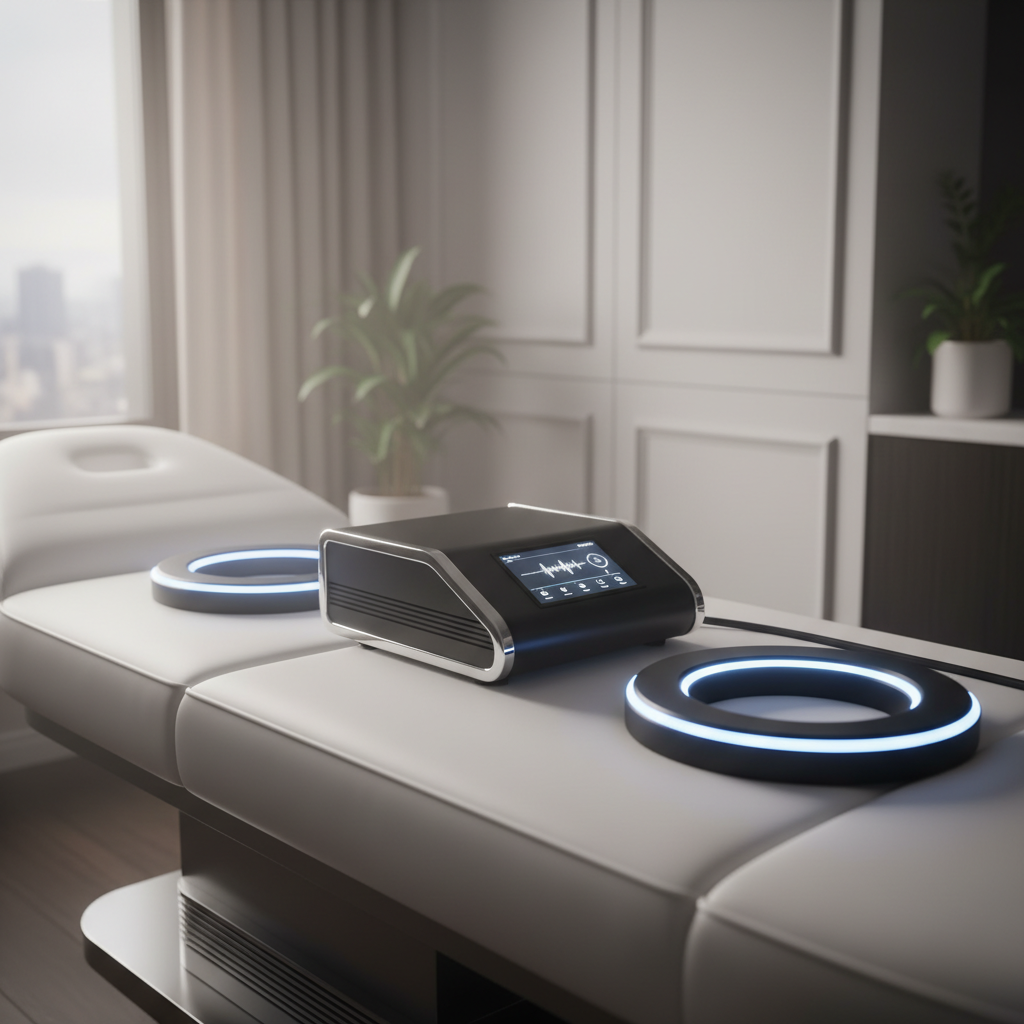
PEMF stands for Pulsed Electromagnetic Field therapy. It's a non-invasive treatment that delivers gentle, pulsed magnetic energy through your body via a mat, ring or applicator.
You stay fully clothed. There are no needles, no drugs, no electric shocks, and most people feel nothing at all during treatment — yet at the cellular level, billions of your cells are being recharged.
The principle is simple: every cell in your body runs on electricity. A healthy cell holds a voltage of around –70 millivolts. When cells are stressed, injured or inflamed, that voltage drops and they can't repair properly. PEMF restores that charge — like jump-starting a tired battery.
It's used in three settings:
- Clinical — fracture healing, post-surgical recovery, chronic pain, neurological support
- Performance — elite athletes use PEMF to train harder, recover faster and stay injury-free
- Wellness — sleep, energy, stress, longevity
Pro Active sits in the rare category of clinics that can deliver all three — sports recovery, clinical rehabilitation, and wellness — under one roof.
How PEMF actually works (the science)
Most therapies treat symptoms. PEMF works upstream, at the cell.
The cellular mechanism
When PEMF pulses pass through your tissue, they induce tiny electrical currents inside the cell. Those currents act on voltage-gated calcium channels — gateways in the cell membrane that control which ions enter the cell.
This triggers a four-step cascade:
1. Calcium ions flood in. This activates calmodulin, an intracellular signalling protein.
2. Nitric oxide (NO) is released. NO relaxes blood vessels, increases circulation, and reduces inflammation.
3. Cyclic GMP rises. This further opens microcirculation and triggers tissue repair signals.
4. Mitochondria ramp up. ATP — the body's energy currency — can increase by 300–400% under PEMF stimulation. More ATP means faster healing, less fatigue, more performance.
This isn't pseudoscience. It's the Pilla model — peer-reviewed and now the most accredited explanation of how low-intensity PEMF affects living tissue.
What that means in plain English
- More energy in every cell
- Better blood flow into damaged or inflamed areas
- Reduced swelling and inflammation
- Faster removal of metabolic waste (like lactic acid)
- Stronger signal for tissues to repair themselves
Why magnetic fields, not electric current?
Magnetic fields pass through skin, fat, muscle and bone without any resistance. There's no need for electrodes, gels or contact patches. This is why PEMF reaches deep tissue — joints, bone marrow, the spine — that surface treatments can't touch.
A short history of PEMF
- 1820s — Hans Christian Ørsted discovers that electric currents create magnetic fields
- 1890s — Nikola Tesla begins experimenting with electromagnetic coils for therapeutic use
- 1970s — Dr Andrew Bassett at Columbia University proves PEMF can heal non-union bone fractures
- 1979 — The FDA clears PEMF for the treatment of non-healing fractures
- 1987 — FDA clearance extended to post-surgical pain and oedema
- 2003 — Dr Thomas Goodwin at NASA completes a 4-year study showing PEMF as the best modality for cellular healing and regeneration in space
- 2008 — FDA clears repetitive transcranial magnetic stimulation (rTMS), a high-intensity PEMF variant, for treatment-resistant depression
- 2010s–today — PEMF moves into mainstream sports recovery and clinical rehabilitation
If it's good enough for NASA and Olympic teams, it's good enough for the rest of us.
What PEMF is used for
PEMF is studied for over 100 conditions. The strongest evidence sits in these areas:
Strong evidence (FDA-cleared or backed by multiple meta-analyses)
- Non-union bone fractures (FDA-cleared 1979)
- Post-surgical pain & swelling (FDA-cleared 1987)
- Knee osteoarthritis — see our dedicated guide — 2024 systematic review found 60% pain reduction
- Lower back pain — chronic and acute
- Tendinitis & tendinopathy — Achilles, tennis elbow, golfer's elbow
- Depression (rTMS, FDA-cleared 2008)
Promising evidence
- Frozen shoulder
- Plantar fasciitis
- Sciatica & disc pain
- Carpal tunnel syndrome
- Whiplash recovery
- Stress fractures (a recurring sports injury)
- Migraine & chronic headache
- Insomnia & poor sleep
- Multiple sclerosis (symptom relief)
- Long COVID fatigue
Sports performance & recovery
- DOMS (delayed-onset muscle soreness) — recovery in 24–48 hours vs 72–96 hours without
- Faster return to play after soft-tissue injury
- Stress-fracture rehabilitation
- Pre-game activation
- Post-game wash-out
Wellness & longevity
- Sleep depth & onset
- Daytime energy
- Stress & nervous-system regulation
- Bone density support
Neurological & complex conditions
Pro Active has been featured in regional press for our work supporting people living with Parkinson's disease. While PEMF is not a cure, our clients consistently report improved tremor control, mobility and quality of life. Speak to us before booking if you're managing a complex neurological condition.
A note on language. UK advertising rules (ASA) and medical regulation are clear: PEMF is not a cure. We use language like "may help" and "evidence suggests" because that is what the science supports. We are honest about what PEMF can and cannot do.
What a session feels like at Pro Active
Before: A short consultation. We'll ask about your goal — recovery, pain, performance, wellness — and any medical conditions, medications or implanted devices.
During: You lie fully clothed on a clinical PEMF mat or sit with a localised applicator over the area being treated. Sessions are 30–60 minutes. Most people feel nothing at all. Some feel a light tingle, gentle warmth or the sensation of "humming" in the tissue. Many people fall asleep.
After: You walk out and carry on with your day. There's no downtime. We recommend drinking plenty of water for the next 24 hours — PEMF accelerates cellular waste removal, and your kidneys do the clearing.
First-session reactions — occasionally people feel mild fatigue, increased thirst, or a slight headache for 24 hours. This is your body responding to improved circulation and detoxification. It passes quickly and is a sign things are working.
We often pair PEMF with red light therapy in the same visit. The two stack beautifully — PEMF works on cellular voltage and inflammation, red light delivers photonic energy directly to mitochondria. Combined, they accelerate results.
Who shouldn't have PEMF
PEMF is one of the safest therapies in clinical use. But it isn't for everyone. Do not have PEMF if you have:
- A pacemaker, defibrillator, cochlear implant or any electronic implant
- An insulin pump or other implanted electronic medication device
- Active bleeding or recent haemorrhage
- An active malignancy (we will refer you to your oncologist)
- Pregnancy (we don't treat over the abdomen during pregnancy)
- A history of seizures or epilepsy (case-by-case, with GP clearance)
- A recent organ transplant on immunosuppressants
Implanted metal (knee replacements, plates, screws, dental work) is fine. The magnetic field doesn't heat metal at the intensities we use.
If in doubt, we'll always check with your GP or specialist before treating.
PEMF vs other recovery tools
| Tool | What it does | Depth | Best for |
|------|-------------|-------|----------|
| PEMF | Recharges cells, drops inflammation, boosts ATP | Whole body, deep | Recovery, joint pain, healing |
| Red light | Delivers photons to mitochondria | Skin → 5cm | Skin, surface joints, energy |
| TENS | Blocks pain signal at nerve | Surface | Acute pain only |
| Ultrasound | Heats deep tissue | Localised | Specific soft-tissue injury |
| Ice baths | Reduces inflammation via cold shock | Surface | Acute swelling |
| Massage gun | Mechanical muscle release | Surface muscle | DOMS, tightness |
| Sports massage | Hands-on tissue work | Variable | Targeted release, body awareness |
PEMF doesn't replace these — it amplifies them. A typical Pro Active recovery stack might be: PEMF mat (40 min) → red light (15 min) → sports massage (30 min). The order matters and we'll programme it for your goal.
How many sessions will I need?
It depends on what you're treating.
| Goal | Typical protocol |
|------|-----------------|
| Acute injury (sprain, strain) | 2–3 sessions/week for 2–3 weeks |
| Chronic joint pain (knee, back) | 2 sessions/week for 6–8 weeks, then maintenance |
| Post-surgical recovery | 2–3 sessions/week for 4–6 weeks |
| Sports performance & recovery | 1–2 sessions/week ongoing |
| Sleep, energy, wellness | 1–2 sessions/week for 4 weeks, then monthly |
| Neurological support | Tailored — usually 2–3 sessions/week for 8+ weeks |
We tell you up front what the realistic protocol looks like for your goal. We'd rather you book 6 effective sessions than 20 you don't need.
The evidence — what the research says
PEMF is one of the most well-researched modalities in cellular medicine.
- Knee osteoarthritis — A 2024 systematic review of 17 studies (1,197 patients) found PEMF produced a 60% reduction in VAS pain scores and 42% improvement in WOMAC scores (Paolucci et al., 2024).
- Pain, stiffness, function — A meta-analysis found PEMF significantly improved pain (SMD 0.71), stiffness (SMD 1.34) and physical function (SMD 1.52) in OA (Yang et al., 2022).
- Sports recovery — A 2024 review in Frontiers in Sports & Active Living concluded PEMF reduces DOMS and accelerates muscle recovery when used alongside exercise (Cochrane review, 2024).
- Cellular regeneration — NASA's 4-year Goodwin study found PEMF was the most effective modality tested for cellular healing and regeneration (NASA Patent MSC-TOPS-96).
- Mitochondrial function — PEMF increases ATP synthesis up to 300–400% via mitochondrial stimulation, and supports angiogenesis (new blood vessel growth) in endothelial cells (Nature Scientific Reports, 2024).
We keep an updated reference library and can share study summaries on request.
FAQs
Is PEMF safe?
Yes — at the intensities used clinically, PEMF has one of the strongest safety records in physical medicine. The FDA has cleared it for human use since 1979. The contraindications above are the only hard exclusions.
Will I feel anything?
Most people feel nothing or a light tingle. Some feel warmth or relaxation. Many fall asleep. You shouldn't feel pain or sharp sensations — if you do, we adjust.
Is it the same as a magnet bracelet?
No. Static magnets don't pulse, don't penetrate deep tissue and don't induce currents at the cell. PEMF is a different physics altogether.
Can I have PEMF if I have metal in my body?
Yes — replacement joints, plates, screws and dental work are fine. Only electronic implants (pacemakers, pumps) are a contraindication.
How quickly will I see results?
Acute issues — often within 2–3 sessions. Chronic conditions — usually 4–6 weeks. Performance and wellness benefits build over time and are cumulative.
Is it covered by private medical insurance?
Some policies cover PEMF as part of musculoskeletal rehabilitation. Speak to us and we can help you check.
Can I do PEMF at home?
Home devices exist but vary wildly in quality and intensity. Clinical-grade systems like the ones we use deliver therapeutic doses that domestic devices generally cannot match. We're happy to advise on home options if you want to top up between sessions.
How is it different from rTMS for depression?
rTMS is high-intensity PEMF targeted at specific brain regions. The therapy we provide is whole-body or localised low-intensity PEMF — different protocol, different goal.
Does PEMF interfere with medication?
No. PEMF doesn't interact with medications.
Can children have PEMF?
We treat from age 16+ as standard. For under-16s with a specific clinical need, we'll consult with the GP or paediatric specialist before treating.
What does a session cost?
Pricing varies by length and stack. Get in touch and we'll talk through the right option for your goal.
Ready to feel the difference?
Pro Active is one of a small number of UK clinics offering clinical-grade PEMF, red light therapy and sports therapies under one roof. Whether you're a competitive athlete, recovering from injury or surgery, managing a chronic condition, or simply ready to feel like yourself again — we'd love to hear from you.
Book your first session, or call us for a no-obligation chat about whether PEMF is right for you.
📍 Manchester · Wigan
📞 07872 868 595
Related guides
- PEMF for Knee Osteoarthritis — the strongest evidence base, and a real alternative for those on NHS waiting lists
- PEMF for Lower Back Pain (coming soon)
- PEMF for Sports Recovery & DOMS (coming soon)
- PEMF for Parkinson's: What We're Seeing in Clinic (coming soon)
- PEMF vs Red Light: The Recovery Stack (coming soon)
Last reviewed: May 2026 · Next review due: November 2026
Author: Vanessa Lloyd, Founder, Pro Active · Sports Therapist
Medical disclaimer: This guide is for information only and does not constitute medical advice. Always speak to your GP before starting any new therapy, especially if you have an existing condition or take medication.
Ready to feel the difference?
Book a no-obligation chat about whether PEMF is right for you.